This post is dedicated to my dearly loved aunt and uncle whom I lost in 2019 and 2020.
If you are reading this post, there might be a possibility that you have recently lost a loved one, so first I’d like to offer my condolences and my deepest sympathy.
Whether you have recently lost a pet, family member or a friend, the grieving process can be a gut wrenching journey that leaves you feeling empty. You are not alone. We all lose someone or something close to us in our lifetime. Some hit harder than others. But one thing is for sure, no matter how prepared we think we are, we are never prepared.
The Five Stages of Grief:
Denial or shock. Sometimes it feels unbelievable. You have a hard time registering they are gone. Sometimes there is a delayed reaction- this is actually quite common. It can be a few hours, days, or even weeks.
The second stage of grief:
Anger and confusion set in. Why did it have to happen? How did this happen? Some may question God’s motives, or why they even get close to people or pets when the pain is so great.
The third stage of grief:
Guilt and alternative outcomes. Even if you have done everything you possibly could, and did it perfectly, guilt sets in. This is perfectly normal. Your brain rehashes alternative life paths that could have saved them. This is also normal. One thing to remember is that if it wasn’t supposed to happen, it wouldn’t have. When I lost my uncle, I hit this stage for a long time. Then I ran across a poem, on accident, as if gifted by my uncle to me. This poem, Desiderata by Max Ehrmann (1927) states, “and whether or not it is clear to you, no doubt the universe is unfolding as it should, therefor be at peace with God, whatever you conceive him to be”. So trust the plan, destiny, or your timeline-but it all happens in it’s place.
The fourth stage of grief:
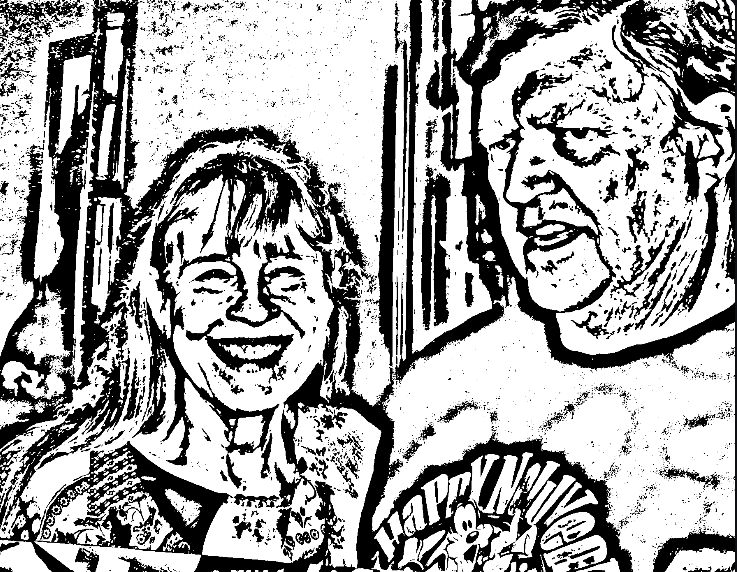
Depression. This is where deep sadness seeps in. If your not careful, it can consume you. This is the stage that I find art therapy helpful. Take a picture of your loved one, or a picture of you and your loved one, and uploaded it into the tool, take your time coloring it. It can help process the memories, process the death, and come to terms with your loss. Art therapy activates more parts of your brain than just talking. There has been many scientific studies on this, and art therapy can be an excellent way to process grief. Painting my aunt after she passed helped me in such a great way. Looking at her eyes, feeling her love, it was such an amazing experience to be able to work through grief with art. Another good thing to do in this stage is to start setting goals and plans. Things you want to accomplish, things you want to do, places you want to visit. Write them down, make a goal board. It is hope that gives us a bridge between depression and acceptance.
The last stage is acceptance. You won’t forget them. The pain will still hit, even years later. It’s not about living without the pain, or without the memories. It’s relearning how to live your life without them in it. Eventually, you learn how to live without them in your life. It is hard in the beginning, getting out of routine. Routine walks, talks, routine plans with whomever you lost. Now you have to learn a new routine. One without them in it. I know. It sucks. But we all get to this new life, we adjust, we grow, and then we can help others do the same. For more information on losing a loved one or dealing with grief, I recommend good-grief.org. It’s a pretty good website with more resources and information.